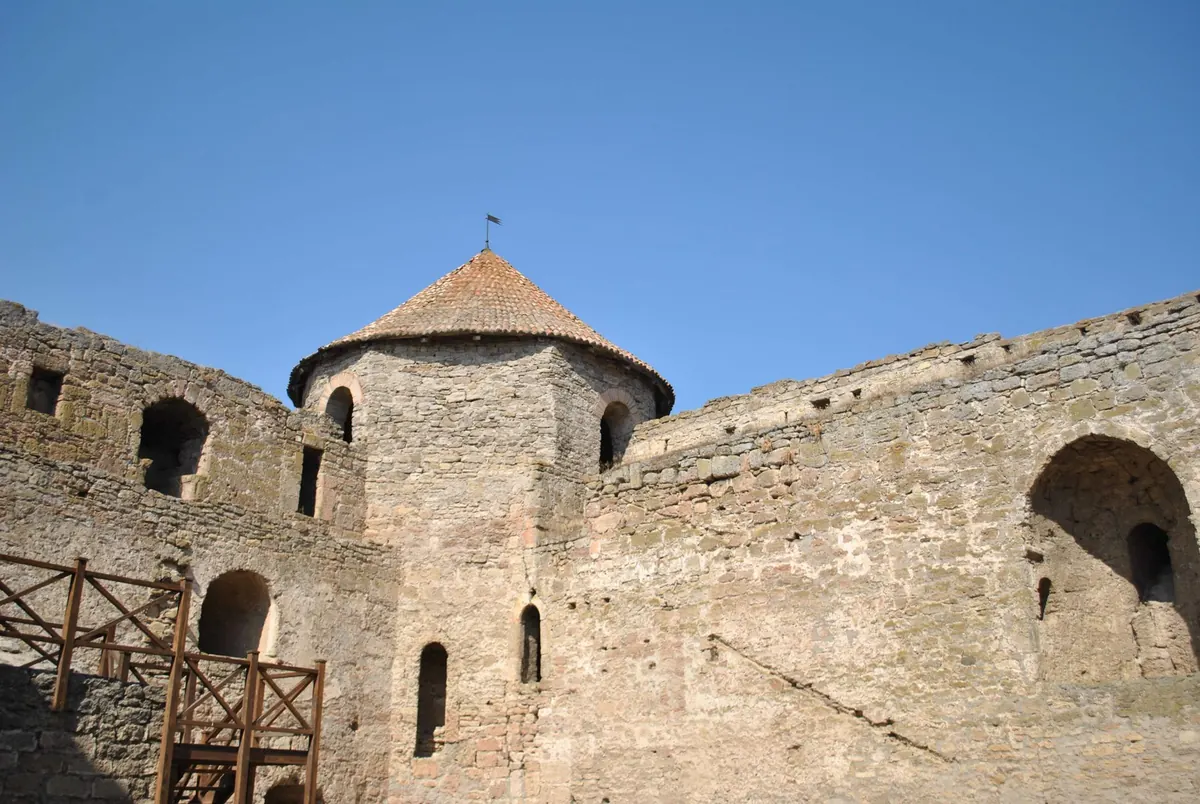
A castle looks simple from the car park. Buy a ticket, walk through the gatehouse, take a photo from the battlements, find the tea room. Then you meet the spiral staircase: ninety-odd worn steps, one rope handrail, and someone coming down while you are going up. Medieval masons were not designing for visitors in new trainers, and the same handful of mistakes turn up at almost every castle, from a rain-soaked Welsh ruin to a Loire château in July. None of them will ruin your day. Each of them costs you something — comfort, time, or a better understanding of the place you paid to see.
1. Wearing the Wrong Shoes
Castles are harder on feet than they look. Expect cobbles, loose gravel, wet grass, uneven flagstones, and stair treads polished smooth by centuries of boots. In ruins you may also meet loose stone, tree roots and mud. Flip-flops, heels and smooth-soled fashion trainers are a poor choice for all of it.
Closed shoes with real grip and a little ankle support are ideal. If you are visiting an unconsolidated ruin rather than a manicured showpiece, treat it like a short country walk: laced shoes, cushioned socks, nothing you mind getting dirty. On wet days, keep a spare pair of socks in the car — damp stone is slippery, and wet feet make the final hour of a visit genuinely miserable. And remember that grounds and gardens are often larger than the castle itself, so you will walk further than your plan suggests.
2. Underestimating the Stairs, Slopes and Distances
Tower climbs are the part most visitors misjudge. A typical keep or gatehouse tower might be eighty to a hundred and fifty steps up a narrow, winding staircase with limited passing space. Walls and ramparts add more, often outdoors and exposed to wind. Low doorways and lintels catch tall visitors who forget to duck.
Go up slowly, keep to one side where you can, and step into a doorway or embrasure to let people pass rather than stopping mid-staircase for a photo. Between one wing and another can be a five-minute walk across a courtyard, so build that into your timing.
If you have a heart condition, vertigo, claustrophobia, joint problems or any doubt about whether a climb is sensible, speak to a doctor before you travel rather than deciding at the foot of the stairs. Many sites offer a ground-level route, a viewing point, or photographs of the rooftop view for those who stay below — it is always worth asking at the ticket desk.
3. Arriving Without Checking the Practical Details
This is the mistake that quietly wrecks the most visits, and it takes about ten minutes online to avoid. Before you set off, confirm:
- Opening hours and last admission. These change with the season, and last entry is often an hour or more before closing.
- Closed days and winter shutdowns. Plenty of sites run reduced days outside high season, or close entirely.
- Ticketing. Busy castles may use timed slots or online-only booking, and combination tickets with gardens or a second site can work out better value if you plan to see both.
- Accessibility. Ask specifically about step-free routes, lifts, mobility scooter hire, and whether prams can be taken into the main buildings or must be left outside.
- Events and closures. Re-enactment weekends, concerts, weddings and filming can shut rooms or fill the courtyards.
- Parking and shuttles. Some castles sit at the end of a narrow lane with limited spaces, or a short but steep walk from the nearest car park.
Write the key facts down or screenshot them. Phone signal inside thick stone walls is unreliable at the worst possible moment.
4. Walking Through Without Knowing What You Are Looking At
An empty great hall looks like an empty room until you know what happened in it. Ten minutes with a floor plan, a guidebook, an audio guide or the panels in each space changes the entire visit: suddenly you can read the defended entrance, the service rooms, the private chambers, the chapel, the kitchen range.
A few words are worth learning before you go — keep, curtain wall, motte, bailey, portcullis, garderobe. They appear on almost every sign you will read, and they turn piles of stone into a plan you can follow.
Ask questions of the staff and volunteers. They usually know the odd details that guidebooks skip: which beam is original, where a blocked doorway once led, why the windows face a particular way. And look up — roof timbers, corbels and carved bosses are easy to miss at eye level. One caution: not everything is medieval. Many castles were remodelled in later centuries, so a Tudor window or a Victorian fireplace is part of the story, not a mistake.
5. Forgetting Castle Etiquette
Old buildings survive on small courtesies. Most of the rules you will see on signs exist for a reason, and following them keeps you welcome without spoiling anyone's visit.
- Do not climb on walls, ruins or cannons. Loose masonry and unstable ground are common, and insurance and conservation rules usually forbid it.
- Do not touch tapestries, wall paintings, plaster or gilded surfaces. Oils from skin cause damage that cannot be reversed.
- Respect photography rules. Flash is often banned in furnished interiors, tripods and selfie sticks are frequently restricted, and drones are tightly regulated around historic sites and private land — check locally before flying anything.
- Keep voices low in chapels and small chambers, and keep phones on silent during talks.
- Stay on marked paths in ruins and gardens, and respect "keep off the grass" signs, which often protect archaeology rather than lawns.
- Follow picnic, dog and bag policies. Some courtyards welcome a sandwich; others do not allow food outside a designated area, and large backpacks may need to be carried in front of you or left behind.
6. Dressing and Packing for the Wrong Weather
Castles are exposed places. Stone radiates heat in summer and cold in winter, battlements catch wind even on a still day in the valley, and courtyards offer little shade. Layers beat a single heavy coat. Bring a hat, sunscreen and a refillable water bottle, and check whether the site has a water point.
Pack light. Narrow staircases, turnstiles and small historic rooms punish oversized bags, and many sites have no left-luggage or locker facilities, so whatever you carry stays with you all day. A small daypack with a rain cover, a charged phone and a bit of cash for the shop will cover most visits comfortably.
A Five-Minute Check Before You Go
Run through this list the night before, and most of the common frustrations disappear:
- Confirm opening hours, last admission and whether booking is required.
- Check the access route inside the site and ask about step-free options if anyone in your group needs them.
- Match your shoes to the ground — cobbles, gravel, grass or ruin.
- Allow roughly double the time you think the castle deserves.
- Download or buy something to read about the site's history, even if it is just a page.
Then arrive unhurried. The best castle visits are not the ones that tick off every tower, but the ones where you stop in a window embrasure, look out over the same view the garrison watched, and take your time.
Photo: Santiago Boada / Pexels