Autumn is the season castles stop being a queue and start being a place. Visitor numbers fall away after the summer holidays, the light drops low and rakes across the walls, and the woods that usually serve as a backdrop turn roughly the colour of the stone itself. Anyone who has shuffled through a great hall behind forty other people in August will notice the difference immediately.
The trade-off is that the castle calendar tightens. Some sites cut their hours in October, gardens close before the buildings do, and a few rural or alpine castles shut entirely for the winter. Plan around those limits and you get some of the best weeks of the year for castle hunting: cold, clear, quiet and cheaper.
Why autumn suits castle hunting
Three things happen at once. The sun sits lower in the sky, so carved stone and stained glass read better than they do under flat summer light. Crowds thin out, which matters most at the famous sites where a single tour bus can fill a courtyard. And shoulder-season rates arrive at nearby hotels, often from mid-October.
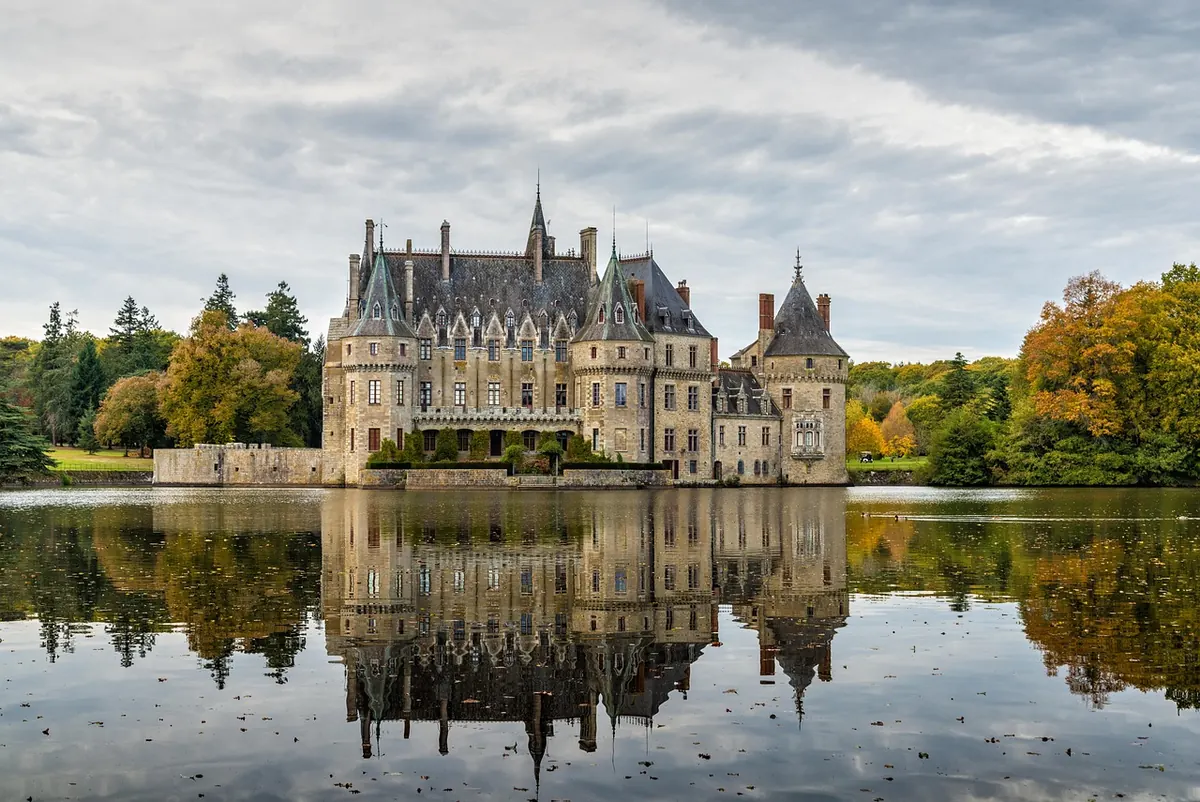
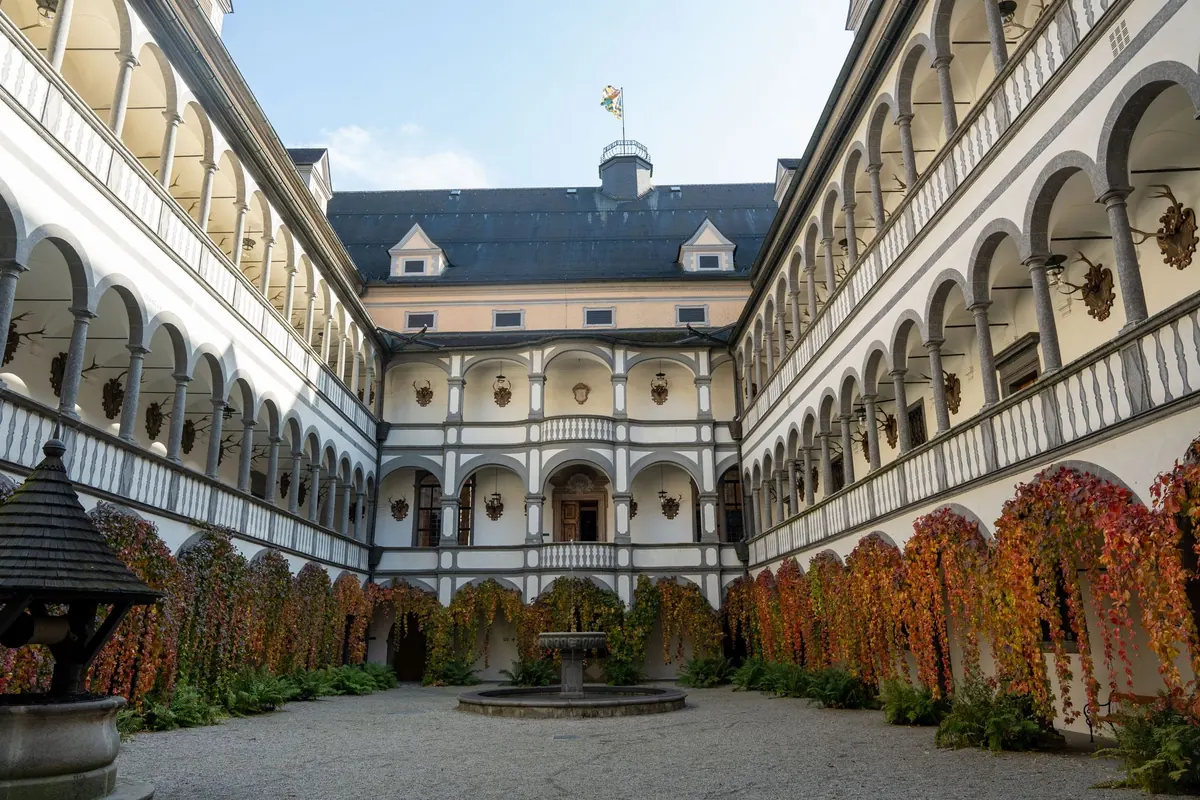
Autumn also changes what you notice. Virginia creeper and ivy flush red on the walls themselves. Moats and ponds collect leaves. Early mist hangs in the valleys below hilltop castles until mid-morning, which is either the best or the worst thing about a 9am start, depending on your tolerance for atmosphere.
Before booking anything, check five things:
- Opening dates. Many castles switch to weekends only in November, and some close for the season entirely.
- Last admission. It is often an hour before closing, and earlier in autumn when daylight is short.
- Guided tour times. Fewer departures run off-peak, and some interior tours are guided-only.
- Garden and outbuilding closures. Walled gardens, chapels and cafes frequently shut before the main building does.
- Weekly closing days. Plenty of historic sites and museums close on Mondays, and some close Tuesdays instead.
Bavaria and the Alps: Neuschwanstein, Hohenschwangau and Linderhof
The Bavarian foothills turn in late September and hold colour through most of October: beech going copper, larch going gold, and the first snow dusting the peaks behind. Neuschwanstein is the obvious draw and the most crowded, but autumn makes it manageable. Book a timed ticket in advance through the Bavarian palace administration, take the first or last slot of the day, and walk up through the forest rather than queuing for the shuttle. The view back from the Marienbrücke bridge is the classic photograph; the bridge can close in icy or snowy conditions, so have a second viewpoint in mind.
Hohenschwangau, directly below, is smaller, warmer in tone, and usually quieter. Linderhof, further west in the Ammergau Alps, has terraced gardens and a wooded setting that suits the season. Across the border, Hohenwerfen in Austria sits above the Salzach valley with mountains all around and a falconry display that runs into the autumn.
The Rhine, Mosel and Harz: vineyards and beech forest
Along the Rhine gorge the vineyards above the river turn yellow and rust, which makes the castle-spotting from a boat or a riverside path unusually good. Marksburg at Braubach is the most complete hill castle on the Rhine and rewards an unhurried interior tour. Burg Eltz, tucked in a wooded valley above the Mosel, is almost made for October: a fairy-tale silhouette surrounded by forest in full colour. It closes for winter, so check the season dates before you commit.
Further north, the Harz mountains run on beech woods and narrow-gauge steam trains. Wernigerode's castle sits above a half-timbered town, and the climb up pays off twice over in autumn, once for the town view and once for the forest behind it.
The Loire Valley: châteaux, forest and river light
The Loire is gentler in autumn than in high summer, when the sun bleaches the tuffeau stone and the car parks fill by ten. Chambord sits inside an enormous walled forest, and autumn is when that forest earns its keep: red deer are active, the tracks are quiet, and you can walk a long way without meeting anyone. Chenonceau's gardens and kitchen plots are still productive in September and October. Chaumont's garden festival usually runs into early November, which is a good reason to time a visit late in the season.
Distances are short here, so build a loop rather than chasing single sites: Azay-le-Rideau reflected in the Indre, Villandry's kitchen gardens, and a riverside cycle path in between.
Britain and Ireland: mist, moss and moats
Bodiam in Sussex is the postcard castle: square, moated, and genuinely beautiful when mist sits on the water at opening time. Cadw's castles in north Wales, Conwy and Caernarfon among them, look their best against low cloud and grey sea. In Scotland, Eilean Donan's setting at the meeting of three lochs is at its most photogenic in autumn, though the light fades early that far north. In Ireland, Kilkenny Castle's parkland and long gallery make a good wet-afternoon stop.
One warning: late October is school half-term in the UK, and family attractions get busy again for a week. Aim for early to mid-October, and visit midweek if you can.
Central Europe and Japan: an autumn that keeps going
If you miss the European peak, the season simply moves south and east. Prague Castle above the Vltava, with Petřín hill turning behind it, stays workable into early November. Karlštejn in the Bohemian karst sits in wooded hills. Bled Castle in Slovenia looks over a lake with the Julian Alps behind it, and Bran in Transylvania is ringed by beech forest that goes deep orange.
Japan runs a second autumn entirely. Himeji and Matsumoto, two of the country's finest surviving castles, are framed by maples that turn from mid-November, and the colour front moves south week by week. If foliage is the point of the trip, plan the castle around the colour rather than the other way round.
Planning an off-season castle visit
Autumn rewards a little homework. A few habits make the difference between a great day and a wasted drive:
- Check the castle's own website, not just a tourism board page. Closures and winter hours are announced there first, and sometimes only there.
- Book timed entry where it exists, even off-peak, and screenshot your ticket before you lose signal in a valley.
- Arrive at opening. You get empty courtyards, soft light and a head start on the first coach.
- Assume interiors are cold and dim. Stone walls hold the night's chill, so bring a proper layer and expect low lighting in halls and stairwells.
- Wear shoes with grip. Wet leaves on cobbles and wooden stairs are genuinely slippery.
- Ask about photography rules at the desk. Flash and tripods are often restricted indoors, and drone use usually needs a permit and is frequently banned outright.
Finally, accept that autumn hours are a moving target. Late-season closures can be decided at short notice for weather or staffing, so a quick call or email the day before is worth more than any guidebook. If a castle is shut, the town around it rarely is, and a walk through the grounds or the surrounding woods is often the best part of the day anyway.